From help on demand to an established value
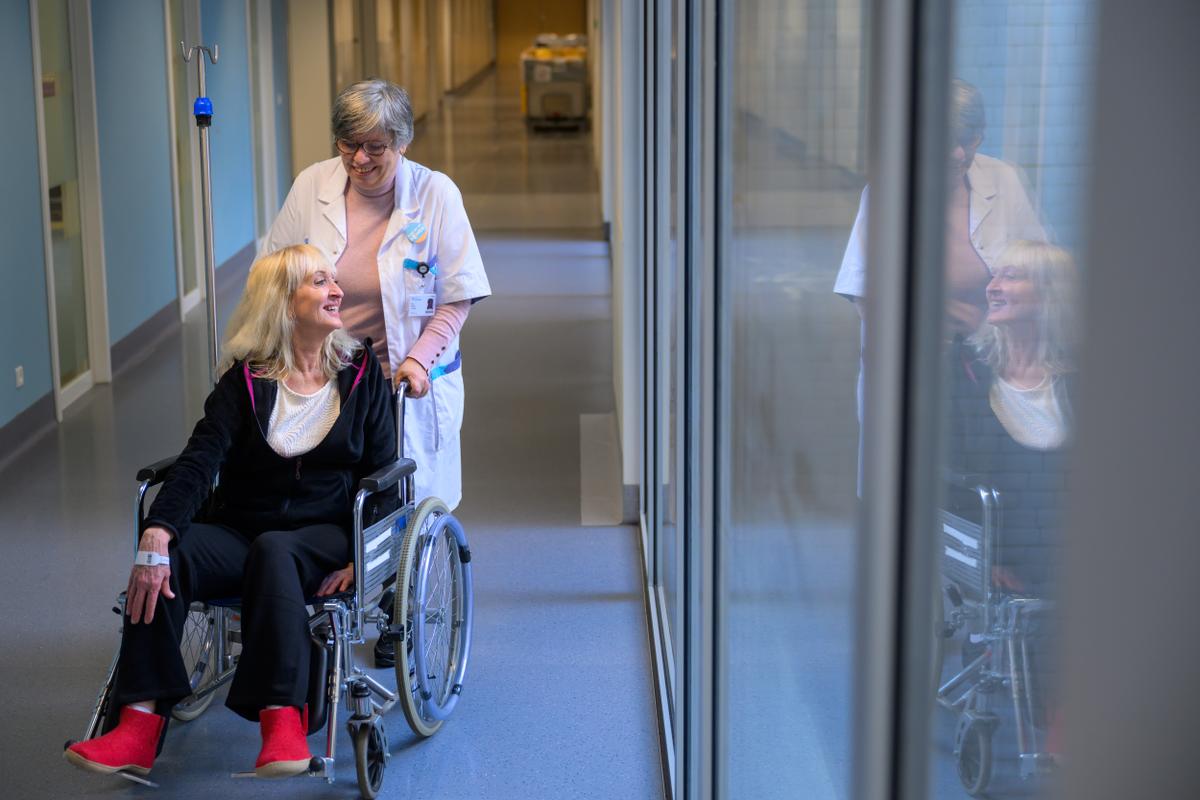
The first volunteers at UZ Leuven were already there before the opening of the Gasthuisberg campus in 1975. 'In those early years, it was primarily social workers and reception staff who responded to needs on an ad hoc basis: a patient needed something, couldn't find their way, or had to run an errand in town. It therefore remained limited to sporadic one-on-one contacts', Karolien says. Since then, the operation has evolved considerably. 'Volunteers work on fixed assignments on fixed days. This keeps their workload manageable and workable, giving them the opportunity to familiarise themselves with the job and letting the team know when they can count on their help.'
Over the years many initiatives have been added. 'In the meantime the newspaper round (1999) and the hospital library (1985) have become an established value in the hospital. But volunteers play a significant part in stewarding, the mynexuzhealth info desk and internal transport of patients to e.g. the hairdressing salon. During covid there was even a special team, the 'to-and-fro desk', which delivered parcels to the patients that were no longer allowed to receive visitors!'
That someone would make time without rushing or a medical agenda, makes a world of difference.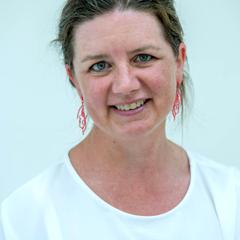 Karolien Bartels
Small gesture, big difference
'Patients especially appreciate the time and attention that volunteers can give them. A nurse or doctor often does not have time for an elaborate conversation in between all their work, whereas a volunteer can take the time to sit down and listen,' says Karolien. 'Sometimes patients tell their entire life story to a volunteer they are meeting for the first time. That someone makes the time without haste of medical agenda, makes a world of difference. Even though volunteers are not necessarily healthcare workers themselves, they are invaluable.”
But the volunteers themselves also derive satisfaction from their commitment. Karolien: 'I often hear that they themselves become richer as a result of these encounters. A genuine conversation, a smile or a simple 'thank you' from a patient makes them go home feeling good.'
A diverse group
The majority of volunteers are retirees, but in recent years, working people and students have also been signing up more often. “Some volunteers combine their job with a commitment in the hospital, because, for example, they work in a tougher sector, such as banking, and want to do something more humane in their free time.'
What is striking is that many volunteers already have a connection with UZ Leuven: “Some were admitted as patients, others have had a relative in the hospital. By volunteering, they want to give something back for the excellent care they have received. There are even people who came into contact with a volunteer at their bedside during their own hospitalisation, which led them to decide afterwards: when I am better, I will also become a volunteer. That is the biggest compliment you can get!”
Looking to the future
With 475 volunteers and a continuous influx of new candidates there is no need for large recruiting campaigns. Nevertheless there are still challenges ahead. 'The administration and coordination is becoming increasingly more complex, especially now that the hospitals continues to grow and the arrival of more and more hospital-wide projects. However, we want to continue focusing on projects in which volunteers – alongside and together with staff – contribute to providing warm care for patients, their loved ones and visitors. We hope to further expand and optimise our activities in the future.'
More information
- Are you interested in joining the team of volunteers at UZ Leuven? Read more about the possibilities and conditions on uzleuven.be/vrijwilligerswerk.
- Watch the ROBtv report on our volunteer work via this link.