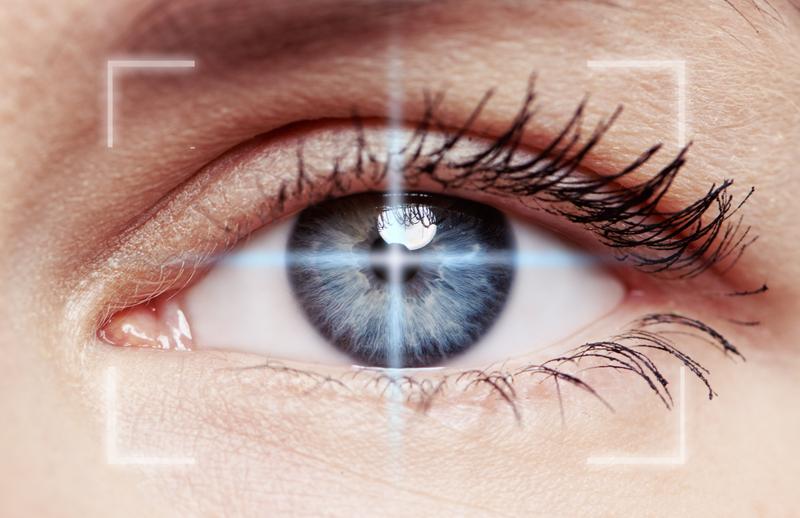
Eligibility criteria
- Aged between 21 and 55
- Spectacle or contact lens prescription:
- Has not changed for at least 1 year.
- Low refractive errors up to −3
- You have good vision in both eyes with your glasses or contact lenses.
- Good general health
Are you not eligible for laser eye surgery? An implantable contact lens (ICL) may be an alternative.
Contraindications
You are not eligible for laser treatment in the following cases:
- During pregnancy or breastfeeding
- You have had a viral eye infection or ocular herpes
- Use of corticosteroids
- Corneal disease, such as keratoconus
- You only wear reading glasses
Specific eyesight requirements apply to some professions, including the armed forces, police and aviation. Refractive surgery is not always permitted in these cases. Check the requirements that apply to you.
Advantages and disadvantages
- No flap is created in the cornea, resulting in less risk during contact sports.
- Treatment is possible with a thinner cornea.
- Only corrects minor refractive errors.
- Because of the superficial wound, the eye remains painful for longer and recovery takes longer, ranging from several weeks to several months.
Price
-
The cost of photorefractive keratectomy (PRK) depends on your insurance cover.
-
Any additional treatment required within 12 months is included. Preliminary examinations are not included in the price.
Preparation
- Do not wear contact lenses before your treatment:
- Hard contact lenses: 3 weeks
- Soft contact lenses: 10 days
- Do not wear eyelash extensions
- You do not need to fast.
- Do not wear make-up on the day of the procedure.
- Bring the prescribed eye drops with you.
- Arrange transport: you will be unable to drive for several days after PRK treatment.
Procedure
Duration: 15 to 20 minutes. The laser treatment itself takes 20 seconds to 2 minutes. The treatment is painless.
- You will first be given a sedative.
- The area around the eye is then cleaned and disinfected.
- Anaesthetic eye drops are administered.
- You then lie down on the treatment table.
- A sterile, transparent drape is placed around your eye.
- Your eye is held open with an eyelid speculum. You cannot blink.
- During the treatment, you look at a point of light in the laser system.
- The superficial layer of cells on the cornea is removed.
- The laser corrects the cornea using a series of laser pulses over a period of 20 seconds to 2 minutes.
- You will hear a crackling sound.
- The laser treatment produces a slight burning smell because corneal tissue is being ablated.
- After the laser treatment, you will be given additional eye drops and a contact lens that promotes healing.
Aftercare
- You will be unable to work for at least 3 days.
- You must not drive for several days after the treatment.
- Your first follow-up examination is scheduled for the day after the procedure.
- Once the anaesthetic eye drops have worn off, your eye will be painful for 48 to 72 hours.
- Are you sensitive to light? Sunglasses can help reduce the discomfort.
- You will be prescribed painkillers and eye drops.
Reduced visual acuity
During the first 10 days after treatment, your visual acuity will generally not yet be perfect. This is because the epithelium is not yet smooth and has not yet regrown to the correct thickness.
Optimal visual acuity is achieved after approximately 1 month. Your prescription may continue to fluctuate slightly for up to 3 months after treatment.
Risks and complications
Photorefractive keratectomy is a safe treatment. Possible adverse outcomes include:
- Under- or overcorrection
- Additional treatment can correct this. This additional treatment is included in the price during the first year after treatment.
- Regular or irregular astigmatism that may cause your vision to deteriorate.
- This does not always improve with glasses.
Symptoms that often occur temporarily during the stabilisation period include:
- Increased sensitivity to light
- Glare
- Fluctuations in visual acuity
- Starbursts or halos around light sources in the dark
- Cloudy vision, or haze, which is particularly noticeable in low light.
These side effects almost always decrease over time.
Brochure

Interested in life without glasses?
Would you like to know whether you are eligible for life without glasses? Take the ‘Quickscan’: a screening test consisting of a few brief technical eye examinations and a short questionnaire. Quick, painless and completely without obligation.