The study compared the decisions of a doctor with those of the AI model in 300 new patients who had to take a daily dose of immunosuppressive medication after their kidney transplant. The UZ Leuven AI application Leuven ran in the study without human intervention via the hospital's electronic patient record system. It is the first time ever we tested a medication dosing model, integrated in the electronic patient record, in a comparative study involving new patients", says prof. dr. Dirk Kuypers.
All patients who undergo a transplant must take the medicine tacrolimus for the rest of their lives to prevent rejection of the new organ. Especially the first weeks after the transplantation, it is not easy for doctors to determine the right dosage of the medication. There are significant individual differences in the extent to which the body absorbs the medicine. Too high a dose can lead to side effects, while too low a dose can lead to organ rejection.
A world first
For the past 3 years, UZ Leuven doctors have been working on an AI application that automatically calculates the correct daily dose of the drug tacrolimus for people who have undergone a kidney transplant. This is the first time worldwide that an AI model has been implemented in a hospital without any intermediate steps or human intervention. The decision support algorithm yielded promising results in the controlled study that are applicable in practice. As soon as the lab has the patient's daily blood results, the AI model suggests a medication dosage. The mathematical model automatically retrieves the patient's medical parameters from the electronic patient record (KWS) and forwards the recommended dose of tacrolimus to the electronic prescription. The transplant doctor only needs to validate or reject the dosage.
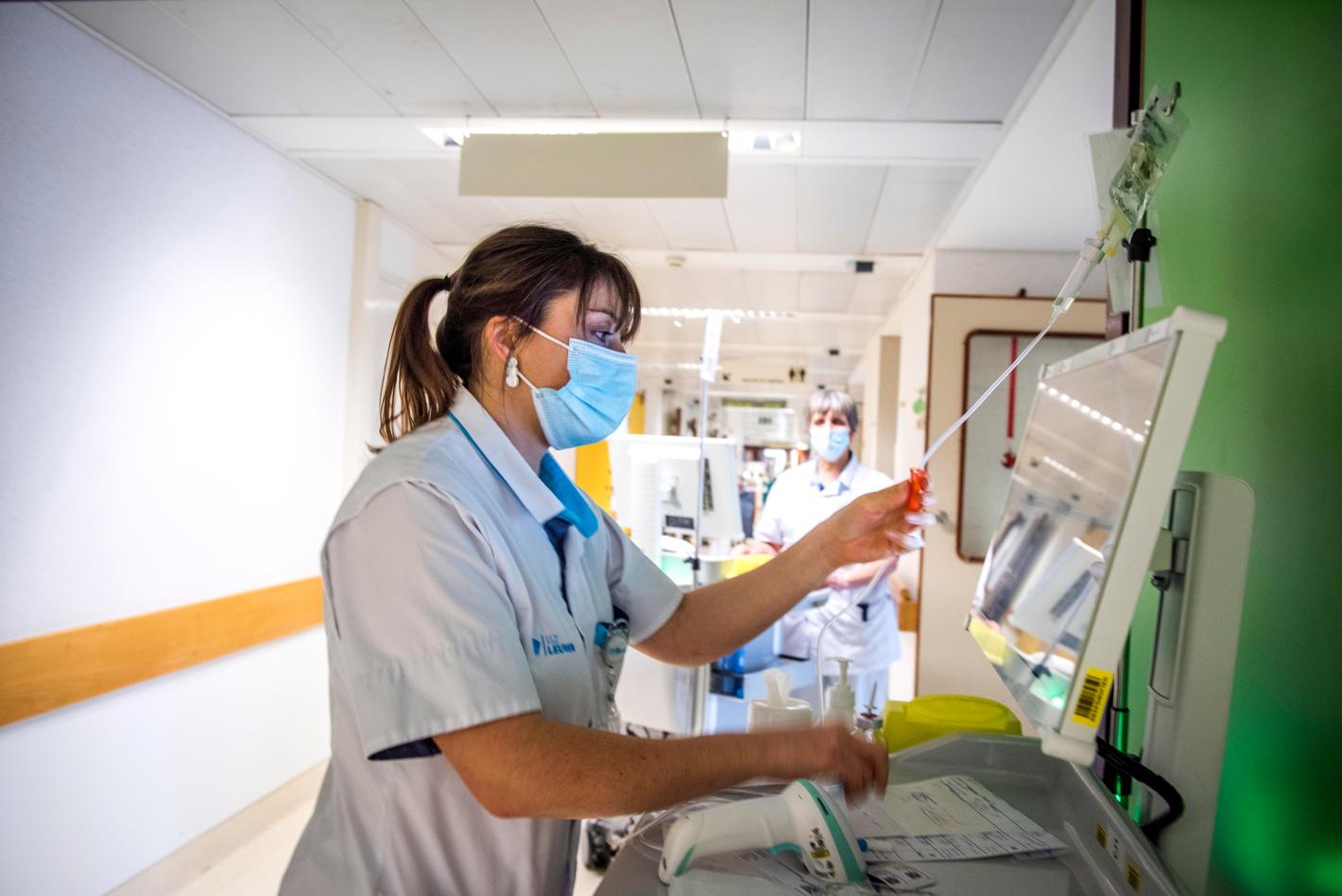
The model was developed in collaboration with the KU Leuven engineering department and the hospital's IT department. First the researchers collected historical data of 315 kidney transplant patients and analysed the tacrolimus dose proposed by doctors based on the concentration in the blood during the first two weeks after the transplant. They used this to create a mathematical model, which they tested with computer simulations. After the simulations showed that the computer could predict the dosage more accurately than the doctors, a real randomised prospective clinical study was conducted in practice with 293 new kidney transplant patients. One in three new patients was given a dose recommendation by doctors, two in three patients got their dose recommendation from the algorithm.
Potential
The study proofs that the AI model systematically predicts more accurate dosages than the doctors in the control group. In more than 99 per cente of the cases, the doctors followed the AI system's recommendation. The AI calculations also led to ideal blood levels more quickly, caused fewer fluctuations and thus provided user-friendly support for doctors to achieve optimal concentrations more quickly. The recently published study was led by Prof. Dirk Kuypers, nephrologist at UZ Leuven.
Prof. dr. Dirk Kuypers: “Our simulations in the computer were almost identical to the computer decisions in the study with new patients. Not only did the simulations confirm an accurate tacrolimus medication dosage for patients after a kidney transplant, but also for transplant patients who received new lungs, a new heart and a oone marrow transplant. It is the first time that we have clinical proof that an completely automated AI model integrated in the electronic patient record can better predict the right medication dose. We are therefore seeing a lot of potential in this model and and continue to conduct research into an AI model that can predict, for example, the correct dose of antibiotics, chemotherapy and other medicines.”
Interestingly, the AI model will eventually provide increasingly accurate recommendations for medication doses because it is based on the most recent information about an individual patient. Over time, the model will take less and less account of historical data from other patients and increasingly rely on the latest data from the patient themselves.
Computer simulations
Other transplant hospitals in Asia and the USA have already shown interest in the UZ Leuven model. The hospital is now considering whether to further develop the model for its own use in the transplant departments at UZ Leuven or to commercialise it for wider use, two options that will be pursued in accordance with Medical Device Regulation legislation.
We will continue to research an AI model that can predict the correct dose of antibiotics.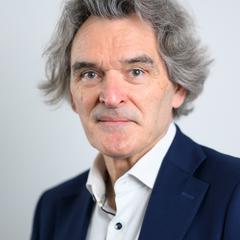 prof. dr. Dirk Kuypers
Prof. dr. Dirk Kuypers: 'We have proven that the principle and platform we have been working on over the past few years are the right way to create this type of AI model. If you can create a model based on historical patient data and demonstrate through computer simulations that the algorithm's predictions are more accurate than human predictions, you save a lot of money and time. The reverse is also true: if computer simulations do not work, you should not attempt to test it in practice.'
The study was recently published in Clinical Pharmacology & Therapeutics.