Ear
- The doctor looks inside the ear with a microscope to assess the ear canal, eardrum and middle ear properly. The ear can also be cleaned if there is earwax or an infection. Aftercare can be provided following ear surgery.
- Tuning fork tests: the doctor makes a tuning fork vibrate, then holds it on your head and in front of and behind your ear. You are asked where you hear the sound best to give an indication of the type of hearing loss.
Nose
- External inspection of the nose
- Anterior rhinoscopy: a nasal speculum is placed in each nostril in turn. This gives the doctor an indication of the condition of the mucous membranes, any deviation of the nasal septum and the presence of nasal polyps or an infection.
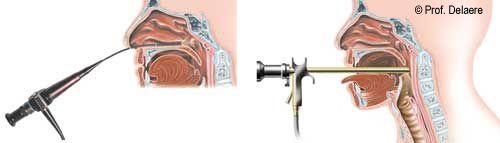
- Nasal endoscopy can be performed in addition to anterior rhinoscopy. Using a small camera, the doctor looks deeper inside the nose to examine the condition of the mucous membrane and other anatomical abnormalities there as well.
Mouth/throat/windpipe
- Inspection of the mouth and throat: a tongue depressor is usually used for this.
- Laryngotracheoscopy: this can be performed as an additional examination for hoarseness, difficulty swallowing, cough, breathlessness or pain deeper in the throat. The doctor passes a thin camera tube through your nose to look deeper into your throat, as far as the vocal cords and the opening of the oesophagus.
Neck
- Inspection
- Palpation: the doctor feels your neck with both hands to check for enlarged lymph nodes or other lumps.
Balance
- Romberg test: you are asked to bring your feet together and stand upright with your hands held out horizontally in front of you.
- Unterberger test: you are asked to march on the spot with your arms stretched out horizontally in front of you.
- Dix–Hallpike test: the doctor turns your head 45° to the right and then moves you from a sitting to a lying position with your head hanging back slightly. This may make you feel dizzy briefly. The test is then repeated on the other side.